


SPEAKERS
Our keynote and invited speakers bring national and international perspectives on the ideas, systems, and leadership shaping the future of research management. Drawn from across science, health, policy, and innovation, each keynote and plenary offers a distinct lens on the challenges and opportunities facing our profession.
Across the conference, our keynote and plenary sessions will challenge assumptions, spark reflection, and invite deeper conversation about how partnerships, platforms, and people can power connected futures for research.
Scroll down to explore our keynote speakers and discover who you’ll be hearing from at ARMS 2026.
KEYNOTE SPEAKERS
Professor Sharath Sriram FIEAust
Chief Scientist of Western Australia

Professor Sharath Sriram is the current Chief Scientist of Western Australia, a Professor with RMIT University, and a Fellow of Engineers Australia. Professor Sriram is a distinguished science and research leader, renowned for creating and delivering breakthrough technologies in the fields of nanoelectronics, sensors, and medical technologies. His work is primarily focused on translating advanced technology for healthcare applications, effectively bringing science fiction to reality. As the Chief Scientist of Western Australia, Professor Sriram provides independent, expert advice to the WA Government on topics important to the future of science and technology in the State.
Professor Sriram has led and coordinated a $60 million multi-user, interdisciplinary research facility and has led medical device prototyping and scale-up manufacturing initiatives, driving innovation and practical implementation in the medical technology sector. In addition to his technical and research contributions, Professor Sriram is an active contributor to science policy, with a particular focus on fostering innovation and developing long-term strategies. He is dedicated to supporting early- and mid-career researchers and is a strong advocate for diversity and inclusion within the scientific community. Professor Sriram contributes extensively to science policy and advocacy. He was the President of the national peak body Science & Technology Australia, and served on the Board of Science & Technology Australia from 2018 to 2025. He delivered a National Press Club address on research translation, a connected innovation ecosystem, and mechanisms to maximise Australian R&D investment.
Keynote Session:
09 September 2026
Connecting the Dots: Shaping a Future-Ready Research System
In a rapidly shifting global environment, the challenge is no longer simply producing excellent research, but ensuring that it translates into enduring capability, impact and prosperity. Funding settings are evolving, expectations of translation are rising, and the pace of change is accelerating – demanding a more connected, responsive research system.
Research management professionals play a critical role in how that system functions. Yet too often, they enable outcomes they are not positioned to see or shape directly. Strengthening this role requires more intentional leadership and deeper, embedded partnerships across the research and innovation ecosystem.
In this opening keynote, Professor Sriram will explore how research systems succeed — and where they fall short. Drawing on his experience across discovery, translation and policy, he will examine the structural challenges that constrain progress, from fragmented pathways and under-supported talent to disconnected approaches to infrastructure, partnerships and commercialisation.
With insights from emerging initiatives in Western Australia, this keynote offers a forward-looking perspective on how research management can move beyond coordination to influence, helping to shape a more agile, connected and future-ready research ecosystem.

Dr Amohia Boulton
Director of Whakauae Research Services
Dr Amohia Boulton (Ngāti Ranginui, Te Āti Awa o te Waka a Māui), is a health services researcher and Director of Whakauae Research Services, the only tribally-owned, health research centre in New Zealand. With over 25 years research experience, all of which has been undertaken in “soft-funded” research centres, Amohia has unique insights into how to navigate the health research funding landscape. She holds Adjunct Professorial positions in two New Zealand Universities; is a Fellow of the Australian Evaluation Society; and is a recipient of both the Royal Society of New Zealand’s Te Tohu Rapuora Medal; and the Health Services Research Association of Australia and New Zealand’s First Nations Health Services Research Award.
Keynote Session:
10 September 2026
Titiro whakamuri, kōkiri whakamua: Reflecting back to chart our future
Dr Amohia Boulton is Director of Whakauae Research Services Ltd, the only tribally owned and mandated health research centre in Aotearoa New Zealand. Leading a team operating entirely within a soft‑funded environment, she has guided the organisation in building sustainable research and research management capability grounded in Māori values and community priorities.
In this keynote, Dr Boulton will reflect on the evolution of Whakauae and the lessons learned in navigating a complex and changing research landscape. She will explore how Indigenous values can be embedded in research management practice, how partnerships have evolved over time, and how organisations can remain innovative, collaborative, and responsive in the absence of traditional institutional support.
Drawing on current shifts in the Aotearoa research system, Dr Boulton will also consider emerging challenges and opportunities, including new approaches to systems change, research dissemination, and data sovereignty. Her reflections highlight the importance of adaptability, values‑led leadership, and capability development in shaping resilient and future‑focused research environments.
Winthrop Professor Fiona M Wood FRACS AO
Director of the Burns Service of WA & the Burn Injury Research Unit
Founder, Fiona Wood Foundation
Prof. Dr. Fiona M. Wood has been a burns surgeon and researcher for over 30 years and is Director of the Burns Service of Western Australia. She is a Consultant Plastic Surgeon at Fiona Stanley Hospital and Perth Children’s Hospital; Winthrop Professor in the School of Surgery at The University of Western Australia; and co-founder of the Fiona Wood Foundation (formerly The McComb Foundation). Professor Wood leads the Paediatric Burn Care team at Telethon Kids Institute and is Co-Head of the Perioperative Care Research Program.
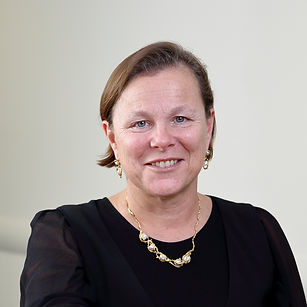
Professor Wood’s has made a significant contribution with her work with co-inventor Marie Stoner, inventing the innovative ‘spray-on skin’ technique (Recell), awarded the Clunies Ross award by the ATSE.
Fiona was named a Member of the Order of Australia (AM) in 2003 in recognition of the response to the Bai bombing. In 2004 she was awarded the Western Australia Citizen of the Year award for her contribution to Medicine in the field of burns research. Fiona was then named Australian of the Year for 2005. She is an Australian Living Treasure. She is a founding Fellow of the Australian Academy of Health and Medical Science and the 2022 Australian Society of Medical Research medallist. Her continued work has led to the being awarded an officer of the Order of Australia (AO) and being inducted into the WA science hall of fame in 2024.
Learn more about Professor Fiona Wood by exploring this Q&A about her life and work.
The videos are hosted on and credited to the Fiona Wood Foundation.
Keynote Session:
11 September 2026
Leadership in research driving innovation from breakthrough to benefit
We are living in a time where science and technology are advancing at an ever-increasing rate. The exponential growth in science and technology is awe inspiring. However, we need to engage in change with ethics and governance in place to ensure safety. Research requires partnerships with each idea being nurtured along a pipeline structured to provide support with an environment where the idea is tested with rigour.
Translation of innovation from research into practice is a long and complex journey. The journey of the “spray on skin cells” will be presented, exploring the partnerships along the journey, the platforms that were utilised, and how people are essential in powering research.
There is no substitute for focused flexible leadership driving engagement with stakeholders and collaborators in designing solutions. In this increasingly complex world, we must develop the capacity to harness the opportunities of advancing technologies in a safe, effective, and sustainable environment.
The concepts presented in a health context are mirrored across the research sectors as seen in the ‘Strategic Examination of Research and Development’ (SERD) in Australia. As we look to the future, the SERD will also be discussed.
INVITED SPEAKERS
Professor Ute Roessner AM FAA
Chief Executive Officer, Australian Research Council
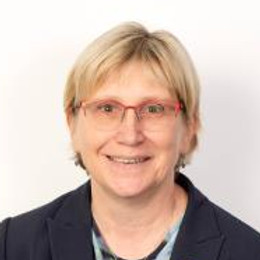
Professor Ute Roessner AM FAA is Chief Executive Officer of the Australian Research Council, having joined the organisation in March 2025. She is an internationally recognised leader in metabolomics and lipidomics, with a distinguished career in plant science research.
Ute’s pioneering work established frontier technologies for parallel analyses of hundreds of metabolites, enabling comprehensive investigation into how plants function under adverse environments. Her research uncovered mechanisms that describe how plants respond to a variety of abiotic stresses, providing avenues for the development of more stress-resilient crops. She also investigated communication and interaction mechanisms between roots and beneficial microbes to improve nutrient and water uptake to enhance plant performance. She previously held the position of Pro Vice-Chancellor (Research Initiatives and Infrastructure) at the Australian National University, has been appointed as Member of the Order of Australia and is an elected Fellow of the Australian Academy of Science.
Professor Roessner’s appointment is for 5 years.
Prue Torrance
Deputy CEO and COO,
National Health and Medical Research Council (NHMRC)
Biography coming soon.
Prue Torrance (she/her) is the Deputy CEO and Chief Operating Officer at the National Health and Medical Research Council (NHMRC), Australia’s leading agency for health and medical research. In this role she oversees NHMRC’s operations, while also leading whole-of-agency stewardship and transformation initiatives. She represents NHMRC in senior Australian Public Service (APS), cross-government and international forums, and serves on a range of national and international research governance and advisory bodies.

Prue has more than two decades of experience working at the intersection of research, policy and public administration, with a particular interest in science policy and funding, ethics, governance and organisational leadership. She has extensive leadership experience in science and research policy and programs, as well as having held senior APS roles in corporate governance and finance. She holds a Master of Studies (Public Policy) from the Australian National University and a Bachelor of Arts (Hons in Political Philosophy) and Science (Psychology).
Keynote Session:
09 September 2026
Research in a Time of Change: Building Trust in a Complex Global Research Environment
Research policy and funding environments globally are navigating a period of significant change, shaped by evolving expectations around openness, research quality, international collaboration and security.
For funders, institutions and researchers alike, the challenge is not simply responding to individual policy developments, but maintaining trust in the research system itself. How can research remain open, collaborative and impact-driven while also addressing increasing expectations around security, sovereignty and responsible knowledge sharing? How do we sustain research quality, integrity and public confidence in a rapidly changing environment? And what do these shifts mean for Australia's place within the global research ecosystem?
The Australian Research Council (ARC) and National Health and Medical Research Council (NHMRC) are advancing a range of initiatives in response to these challenges, including work on research quality, security and international collaboration, alongside broader initiatives on open access, responsible research assessment and research data.
This session will bring together senior representatives from the ARC and NHMRC to explore the opportunities, tensions and emerging expectations shaping Australia's research system. Through focused presentations and a panel discussion, delegates will gain insight into how policy is evolving, while considering the broader strategic questions facing institutions and research managers as they support researchers in an increasingly complex global environment.
Professor Sharon K. Parker, FASSA
ARC Laureate Fellow, John Curtin Distinguished Professor,
Director, Centre for Transformative Work Design,
Future of Work Institute, Curtin University
Sharon K. Parker is an ARC Laureate Fellow, John Curtin Distinguished Professor at Curtin University, and Director of the Centre for Transformative Work Design in Perth, Western Australia. A globally recognised authority in organisational behaviour, her research focuses on work design, proactivity, performance, mental health and organisational change.

Professor Parker has published more than 280 peer-reviewed articles in leading international journals, including the Journal of Applied Psychology and Academy of Management Journal, accumulating over 60,000 citations. Her research has directly shaped work health and safety policies in Australia, the UK and USA.
Her contributions have been recognised through numerous prestigious awards, including the Dave Ulrich Impact Award (2026), the Distinguished Contribution to Psychological Science Award from the Australian Psychological Society (2025) and the WA Premier's Scientist of the Year Award (2024).
She will soon lead the $94.6 million ARC Centre of Excellence for Quality Work in a Digital Age (QWiDA).
Keynote Session:
10 September 2026
Designing Quality Work in a Digital Age
Digital technologies and artificial intelligence are transforming how work is organised, performed and experienced. Yet while organisations continue to invest heavily in new technologies, many struggle to realise the expected benefits, and workers often face increasing complexity, uncertainty and pressure.
Drawing on her extensive research into work design, organisational change and employee wellbeing, Professor Sharon Parker will explore how organisations can ensure that technology enhances rather than diminishes the quality of work. Using the SMART Work Design model as a guiding framework, she will examine how AI and other digital technologies are reshaping roles, responsibilities, and decision-making, and why successful transformation requires much more than implementing new tools.
Using practical examples, Professor Parker will discuss how leaders can design healthy, productive and inclusive workplaces, the capabilities needed to thrive in an increasingly digital environment, and what should remain distinctly human in the future of work. The session will offer practical insights for research managers and institutional leaders seeking to balance technological innovation with workforce wellbeing and performance.